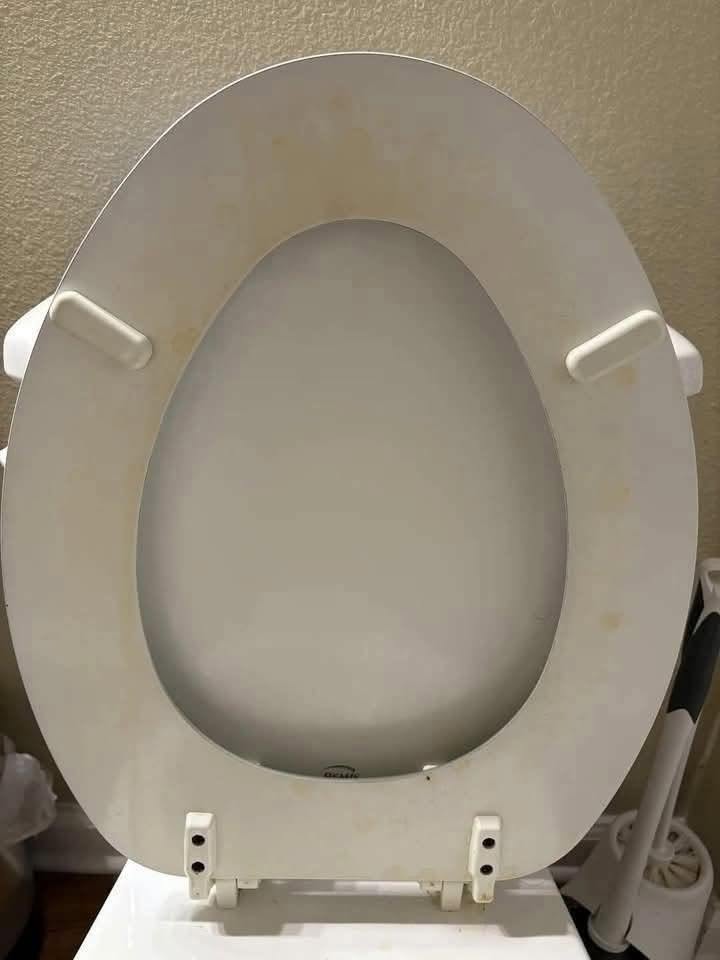
Dampen a cloth with diluted vinegar and place it over the affected area for a short period.
Then gently wipe the surface and rinse thoroughly with clean water.
Do not use vinegar if the manufacturer specifically advises against acidic cleaners.
And never combine vinegar with bleach.
What About Baking Soda?
Baking soda can be useful as a mild abrasive, but aggressive scrubbing isn’t the goal.
If necessary, make a small paste with baking soda and water and gently work it over the stain with a soft cloth.
Avoid abrasive pads, steel wool, scouring powders, or anything that could scratch the plastic.
Once the surface is scratched, dirt and mineral deposits can become even easier to trap.
Give the Cleaner Time to Work
One of the biggest mistakes people make is scrubbing harder instead of allowing a cleaner time to loosen the buildup.
For mineral deposits, gentle contact with an appropriate cleaner can be more useful than excessive force.
Apply the cleaner according to its instructions, allow the recommended contact time, then wipe and rinse thoroughly.
What If the Yellowing Doesn’t Come Off?
Sometimes the problem isn’t a removable stain at all.
Plastic can become permanently discolored as it ages.