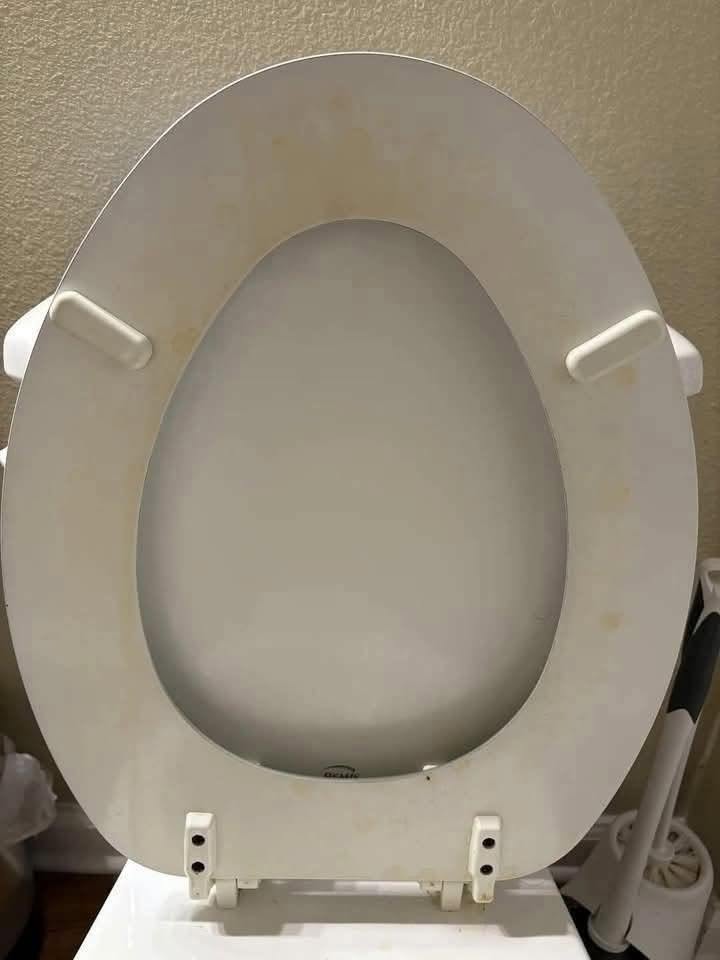
That Stubborn Yellow Ring on Your Toilet Seat? Here’s a Gentle Way to Remove It

But bleach isn’t automatically the best choice for every toilet seat.

Certain plastics can become discolored or damaged by repeated exposure to harsh chemicals. Bleach can also create dangerous fumes if it is mixed with acidic cleaners or other household chemicals.

So if you’re cleaning a plastic toilet seat, check the manufacturer’s care instructions first.

And never mix bleach with vinegar, toilet-bowl acids, ammonia, or other cleaning products.

Start With a Gentle Cleaning Method

For a washable plastic toilet seat, begin with the mildest approach.

Step 1: Remove the Seat If Possible

If your toilet seat can be easily removed, taking it off can make cleaning much easier.

It allows you to reach areas around the hinges where grime often accumulates.

If you’re not comfortable removing it, simply raise the seat and work carefully around the hinges.

Step 2: Wash Away Surface Dirt

Use warm water and a mild dish soap or gentle household cleaner.

Apply it with a soft cloth or non-abrasive sponge.

This removes ordinary dirt and allows you to see whether the yellow mark is actually mineral buildup or something else.

Step 3: Try Diluted White Vinegar for Mineral Deposits

If the discoloration appears to be caused by hard-water deposits, diluted white vinegar can help dissolve mineral buildup.

Leave a Reply

Your email address will not be published. Required fields are marked *