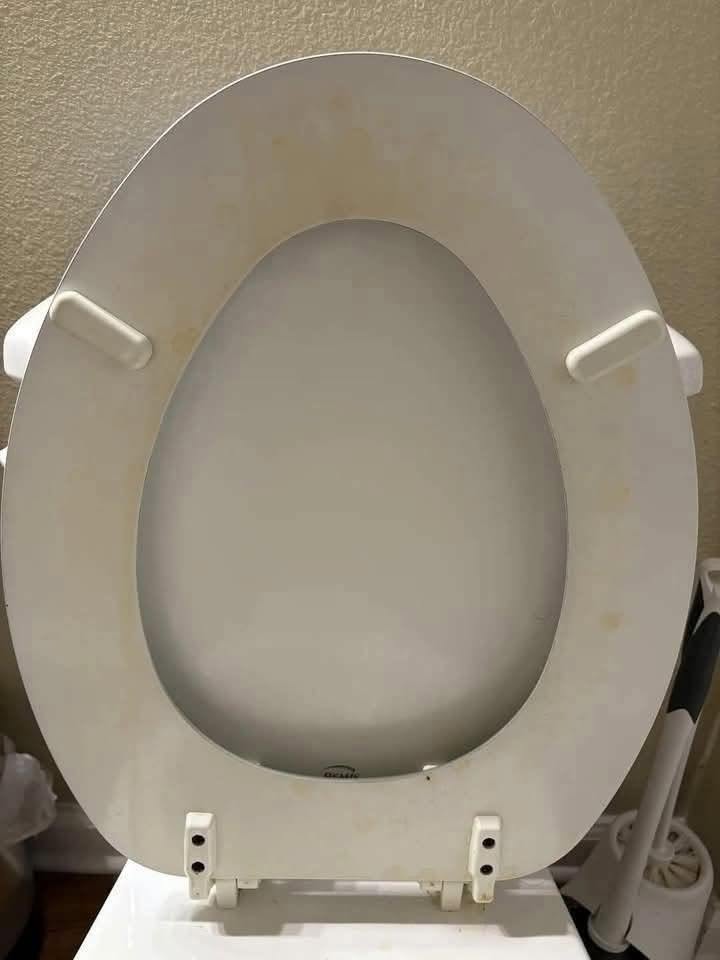
There are few bathroom cleaning problems more annoying than a yellow ring that refuses to disappear from a toilet seat.
You clean it. You wipe it. You scrub it again.
And somehow, the yellowish mark is still there.
Before reaching for the strongest chemical you can find, it helps to understand what may actually be causing the discoloration—and why aggressive cleaning isn’t always the best solution.
Why Does a Toilet Seat Turn Yellow?
That stubborn yellow mark isn’t necessarily ordinary dirt.
Several things can contribute to the discoloration.
Hard Water Deposits
If your household water contains minerals such as calcium and magnesium, repeated splashes can leave behind mineral deposits.
Over time, these deposits can build up and create a yellowish or chalky-looking ring.
Everyday Residue
Small amounts of bathroom residue can accumulate around the toilet, particularly in areas that aren’t cleaned regularly.
Over time, moisture, minerals, and organic residue can combine into a stubborn film.
Cleaning Product Buildup
Another surprising possibility is residue from cleaning products.
Some products can leave behind a film when they’re used excessively or aren’t rinsed properly. That residue can then trap additional dirt and minerals.
Why Bleach Isn’t Always the Answer
When people see a yellow stain, their first instinct may be to reach for bleach.