What Is That Weird Toothed Part on Kitchen Scissors For? (And 4 Brilliant Hacks You’ve Been Missing)

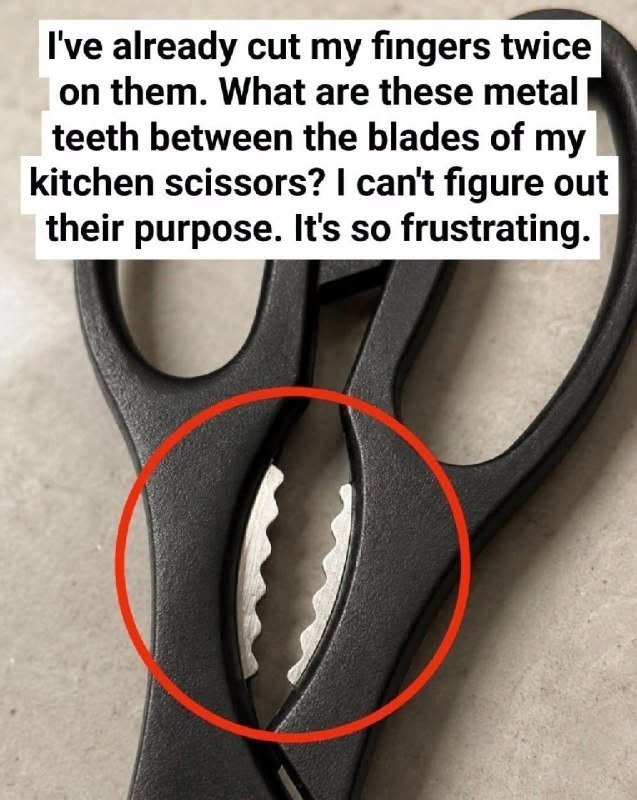
Have you ever paused while making a sandwich, looked down at your kitchen shears, and noticed that strange, jagged little section nestled right between the handles? You’ve likely thought, “What the heck is this for?” If you have never actually used this portion of your scissors, you are not alone. Many people don’t even recognize it as a functional tool. It just sits there, quietly waiting in the drawer.

But what you should know is that this little feature is actually incredibly helpful. It is not an accident of design, a manufacturing quirk, or a bizarre aesthetic choice. That little gripping part is an integrated, multi-purpose tool that you have probably been ignoring for years.
Let’s talk about what it actually is, how to use it, and why this tiny piece of metal is one of the most underappreciated, resourceful components of your kitchen apparatus.
First: What Exactly is This Toothed Part?
If you look closely at your kitchen scissors, you will find this feature right where the handles start to curve inward, just below the finger loops. Sometimes it is made of heavy-duty metal; other times, it is reinforced plastic. It always looks rugged, with deep, interlocking ridges.
If you close the scissors slowly, you’ll see the ridges come together and lock, creating a tight, serrated gripping surface.
Depending on the brand, it is usually marketed as a “jar opener,” “nutcracker,” or “bone cracker.” But at its core, it is simply a leveraged gripping device. It enhances your traction and multiplies your hand strength when your fingers alone just aren’t cutting it.

5 Brilliant Ways to Use the Serrated Notch
Now that we know what it is, let’s put it to work. Here are the best ways to use this hidden tool to make your time in the kitchen easier, safer, and a little more resourceful.

Leave a Reply

Your email address will not be published. Required fields are marked *