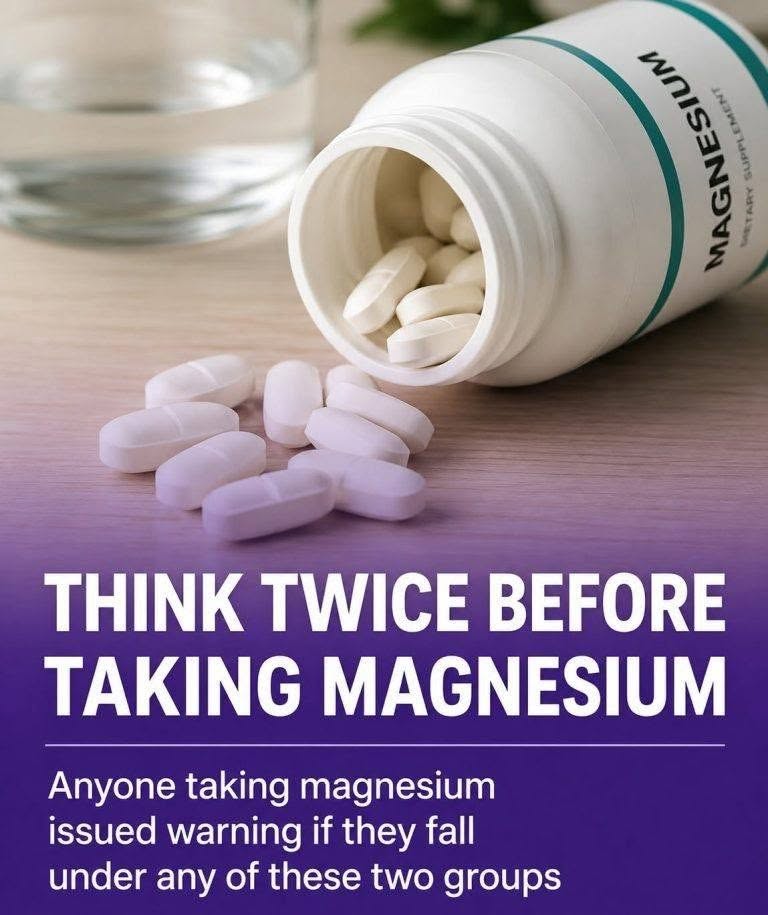
Taking Magnesium? Experts Say These Two Groups Should Be Especially Careful

For adults, the NIH lists an upper limit of 350 mg per day of magnesium from dietary supplements and medications. This limit does not include magnesium naturally present in food.

That doesn’t mean everyone should take 350 mg.

The recommended daily amount for adults is higher because it includes magnesium from all sources, including food. Adult men generally need 400–420 mg per day, while adult women generally need 310–320 mg, depending on age and life stage.

The difference is important: the 350-mg upper limit applies specifically to supplemental and medication sources.

What Happens If You Take Too Much?

Excessive supplemental magnesium can cause digestive problems.

Common effects include:

  • Diarrhea
  • Nausea
  • Abdominal cramping

Extremely high amounts can be much more serious and may lead to low blood pressure, difficulty breathing, irregular heartbeat, and, in severe cases, cardiac arrest.

These severe problems are uncommon, but they illustrate why taking large doses without a reason isn’t a good idea.

Why Magnesium Is Still Important

The warning doesn’t mean magnesium is dangerous.

Quite the opposite.

Magnesium is an essential nutrient involved in more than 300 enzyme systems in the body. It helps support normal nerve and muscle function, blood glucose regulation, blood pressure, protein production, and bone health.

The goal isn’t to avoid magnesium.

The goal is to get an appropriate amount and understand when supplementation may require extra care.

Leave a Reply

Your email address will not be published. Required fields are marked *