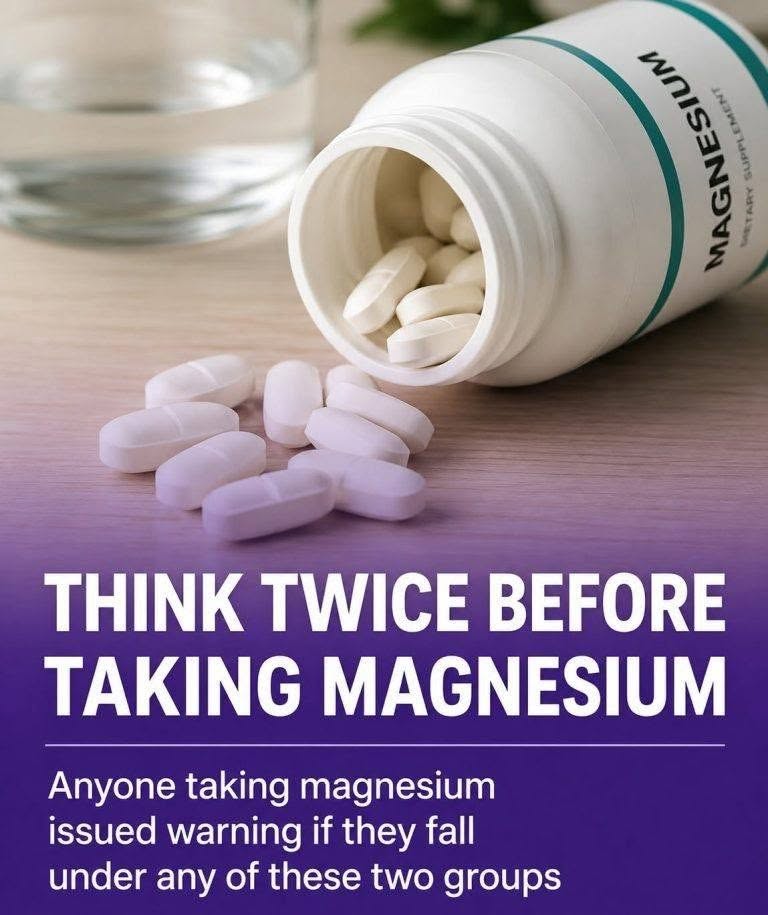
A Simple Rule Before Taking a Supplement
If you’re considering magnesium, start by looking at your diet.
Foods such as nuts, seeds, legumes, whole grains, and leafy greens can provide substantial amounts of magnesium naturally.
If you still think you need a supplement, check the label carefully and consider talking with a healthcare professional—especially if you have kidney problems or take prescription medications.
Don’t Assume “Natural” Means Risk-Free
Magnesium is a naturally occurring mineral, but that doesn’t automatically make concentrated supplements harmless.
The same principle applies to many vitamins and minerals: the body needs them, but more isn’t necessarily better.
A supplement can be useful when there’s a genuine need, but taking high doses simply because a product promises better sleep, more energy, or other benefits isn’t always appropriate.
The Bottom Line
Magnesium is essential for good health, and getting enough from food is important.
But people with impaired kidney function and people taking certain medications should be especially careful with magnesium supplements.
If you’re in either group, don’t guess about the right dose. Ask a doctor or pharmacist whether magnesium is appropriate for you and whether it needs to be separated from any medications you’re taking.
Sometimes the safest approach isn’t taking more of a nutrient—it’s making sure you’re taking the right amount for your individual situation.