2. Try an Oxygen-Based Brightener for Stubborn Yellowing
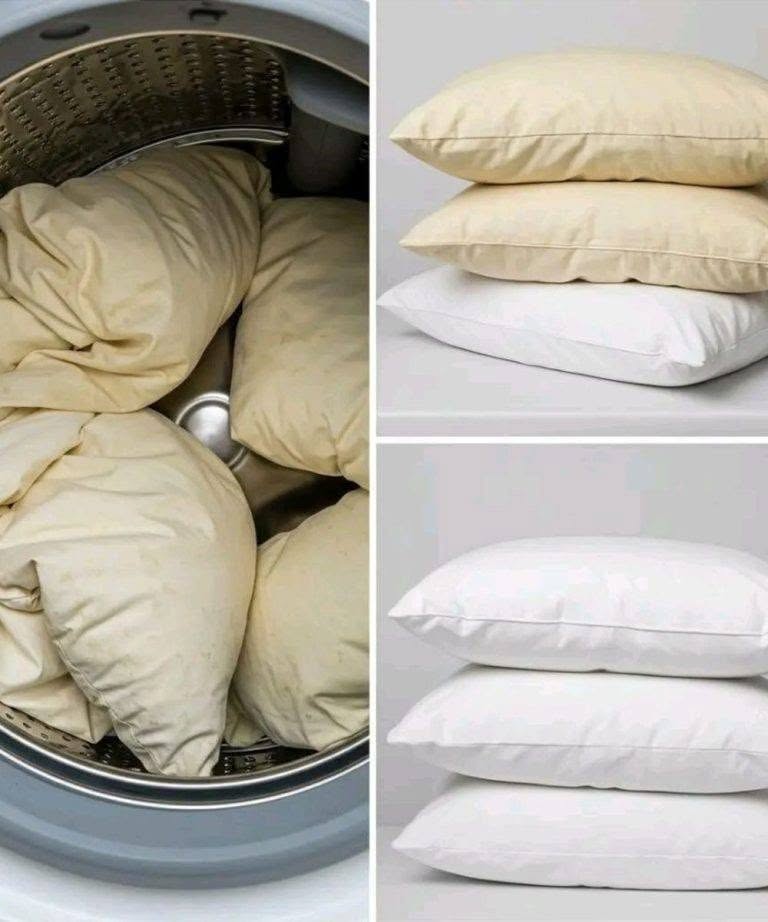
If ordinary detergent isn’t enough, an oxygen-based laundry whitener can help lift discoloration from washable fabrics.
Follow the product’s instructions carefully and make sure it’s suitable for your pillow’s material.
This can be a better choice than immediately reaching for chlorine bleach, particularly when you’re dealing with stains caused by sweat and body oils. Some cleaning experts specifically recommend oxygen bleach for yellowed bedding.
For especially stubborn stains, pre-soaking the washable pillow according to the cleaner’s directions can give the product more time to work.
Never mix different cleaning chemicals together.
3. Don’t Underestimate Proper Drying
Cleaning isn’t finished when the washing machine stops.
A pillow that remains damp inside can develop unpleasant odors and may not be suitable for use.
If the care label permits tumble drying, use the recommended temperature and periodically fluff or reposition the pillow. Dryer balls can help prevent some types of filling from clumping. Down pillows generally require gentler drying than many synthetic-filled pillows.
If air-drying is recommended, place the pillow somewhere well ventilated and make sure the entire interior is thoroughly dry before putting it back on your bed.
Why Do Pillows Turn Yellow Anyway?
The yellow color isn’t necessarily a sign that your pillow is dirty in an unusual way.
It’s a natural consequence of repeated exposure to the human body.
During sleep, pillows come into contact with:
- Sweat
- Skin oils
- Saliva
- Hair products
- Skin-care products
- Moisture
Over months and years, these substances can penetrate the pillow and gradually discolor the fabric.
That’s why even someone who regularly changes their pillowcase can eventually discover a yellow pillow underneath.