Natural Weed Control: A Simple Homemade Method Gardeners Keep Talking About


If it accumulates in soil, it can make that area difficult for other plants to grow in later. Extension specialists specifically warn that salt can act as a soil sterilant.

For that reason, salt-based weed treatments are better avoided around lawns, flower beds, vegetable gardens, and areas where you plan to grow plants.
Why Add Dish Soap?

Dish detergent is sometimes added because it can help a liquid spread across the waxy surface of leaves instead of simply forming droplets.

That can improve contact between the spray and the unwanted vegetation.

However, ordinary household dish detergents aren’t designed to be herbicides. Penn State Extension warns that dish detergents can affect soil properties and beneficial microorganisms.

So calling the mixture completely “natural” or harmless can be misleading.

What About Citric Acid?

Some homemade recipes also include citric acid.

Like vinegar, citric acid is acidic and can contribute to damage on plant tissue.

But adding more acidic ingredients doesn’t automatically turn a homemade mixture into a safer or more effective herbicide.

More powerful isn’t always better—especially when desirable plants are nearby.

Where These Homemade Sprays May Make More Sense

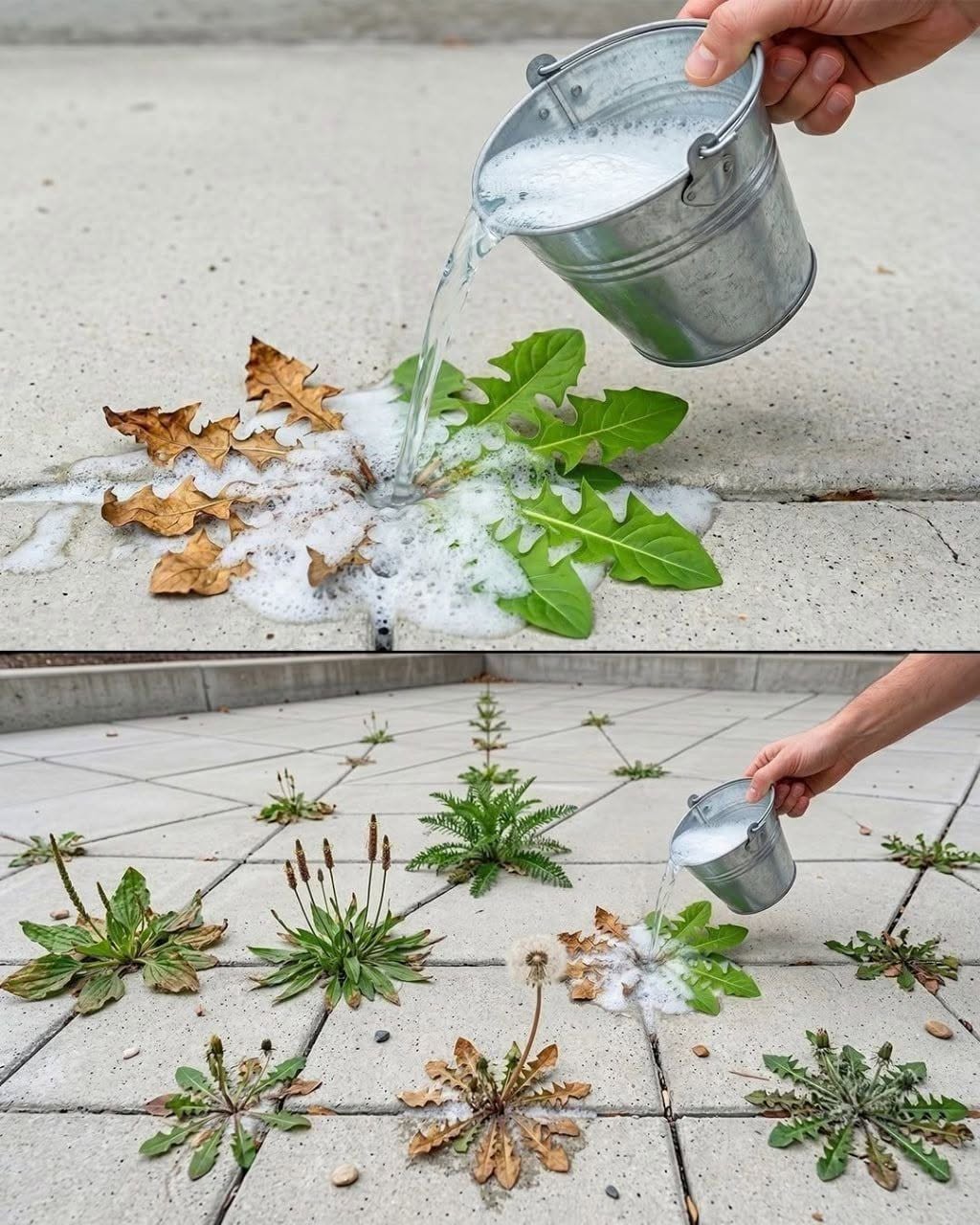
If someone chooses to use a vinegar-based treatment, the safest application is generally very targeted.

For example, unwanted vegetation growing through cracks in a driveway or walkway is easier to isolate than weeds growing among vegetables or flowers.

The spray should be applied only to the unwanted plant tissue.

Even then, overspray can damage nearby vegetation.

Don’t Spray Your Lawn

This is one of the most important points.

A homemade weed killer is non-selective.

That means it doesn’t recognize which plants you want to keep.

If the spray lands on grass, flowers, herbs, or vegetables, it can damage them too.

A windy day can therefore turn a small weed-control job into an accidental garden-damage problem.

Young Weeds Are Usually Easier to Control

Small annual weeds are generally easier to deal with than large, established plants.

Once a weed has developed a substantial root system, killing its leaves may not be enough.

It can simply produce new growth.

That’s why physical removal remains one of the most dependable approaches for many garden weeds.

The Simplest Solution May Still Be Pulling Them Out

It isn’t glamorous, but hand-pulling can be remarkably effective.

When practical, remove the weed while the soil is slightly moist and try to remove as much of the root system as possible.

For scattered weeds, this can be safer than spraying an entire area with a homemade mixture.

Mulch Can Help Prevent the Problem

If weeds are repeatedly appearing in garden beds, prevention can be more useful than repeatedly killing them.

Organic mulch can help cover bare soil and make it harder for weed seeds to germinate.

Regularly maintaining mulch and removing weeds while they’re still small can significantly reduce the amount of work required later.

Be Careful With Strong Vinegar

There’s another important safety issue.

Not all vinegar is the same.

Household vinegar is much weaker than concentrated horticultural products. Extension specialists warn that higher concentrations of acetic acid can cause serious skin and eye injuries.

So don’t assume that a stronger product is simply a more effective version of kitchen vinegar.

If you’re using a commercial gardening product, follow its label exactly and use the recommended protective equipment.

Never Mix Household Chemicals Casually

A homemade gardening recipe can look harmless because the ingredients are familiar.

But familiar doesn’t mean risk-free.

Avoid experimenting by adding bleach, ammonia, strong acids, or other cleaning chemicals to a weed-control mixture.

Some combinations can produce dangerous chemical reactions or fumes.

A Better Way to Think About “Natural” Weed Control

The word natural can create a false sense of safety.

Vinegar, salt, and detergents may all be common household substances, but when they’re deliberately used to kill plants, they’re functioning as pesticides.

The question shouldn’t simply be whether something is natural.

The better question is:

Is it effective for this particular weed, and can it be used without damaging the plants, soil, people, or animals around it?

The Bottom Line

Homemade weed-control recipes can be tempting because they’re inexpensive and use ingredients many people already have.

Vinegar can damage weed leaves, while salt can increase the drying effect. But the same ingredients can also harm plants you want to keep, and salt can create long-term problems in soil.

For small areas, hand removal and mulching are often safer first choices.

And if you decide to use a weed-control product, choose one that’s specifically labeled for the intended use and follow the directions carefully.

The best weed-control method isn’t necessarily the strongest one—it’s the one that removes the unwanted plants without creating a new problem in your garden.

Leave a Reply

Your email address will not be published. Required fields are marked *