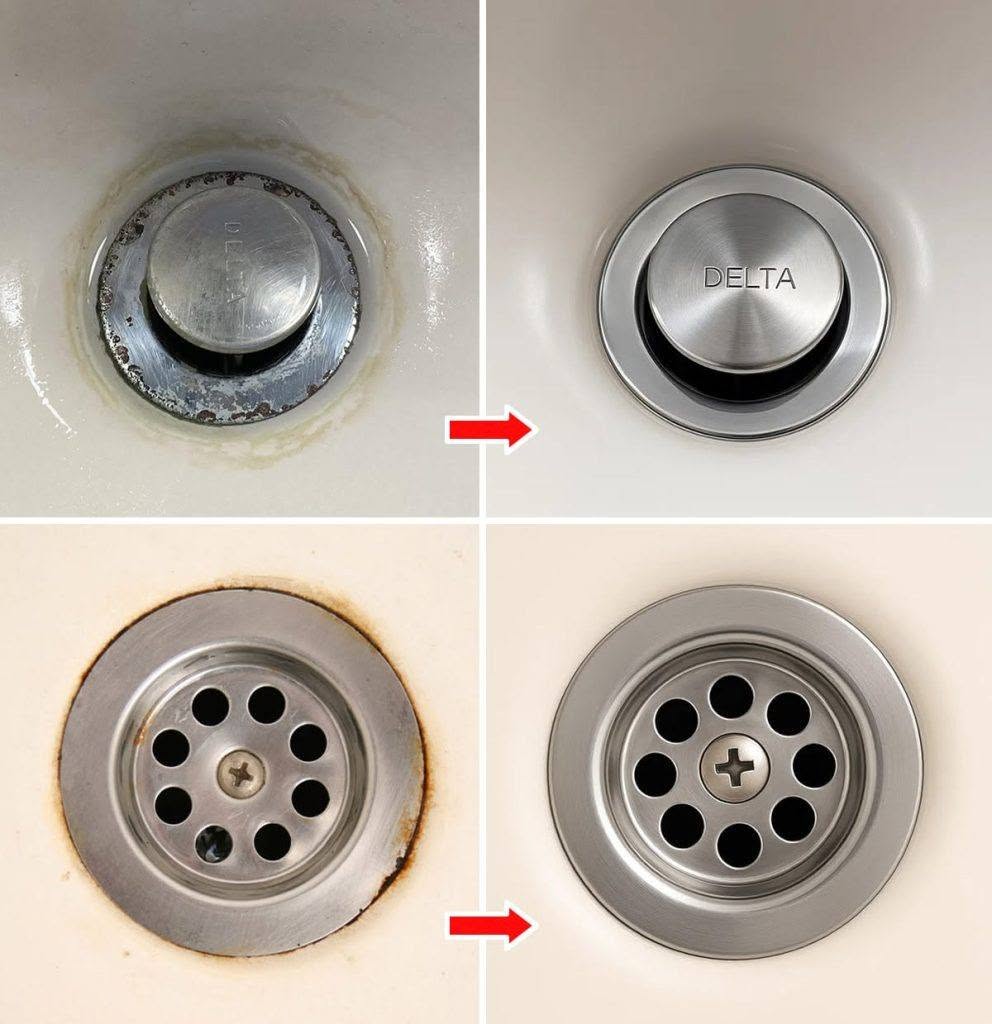
gray, or chalky residue, mineral deposits may be part of the problem.
A commonly recommended method is to mix equal parts white vinegar and water. Soak a cloth in the mixture, place it around the affected area, and allow it to sit for a short period. Then gently wipe or brush away the loosened residue and rinse the surface thoroughly.
For removable faucet aerators, soaking them separately can also help loosen mineral deposits.
Don’t Scrub Too Aggressively
It may be tempting to use a rough sponge or abrasive powder when the buildup is stubborn. However, aggressive scrubbing can scratch or dull certain faucet finishes.
Faucet manufacturers commonly recommend avoiding harsh abrasives, bleach-based cleaners, and strong chemical products unless they are specifically approved for the finish.
Always check your faucet manufacturer’s cleaning instructions before trying a new product.
What If the Ring Is Around a Stone Countertop?
Be especially careful if