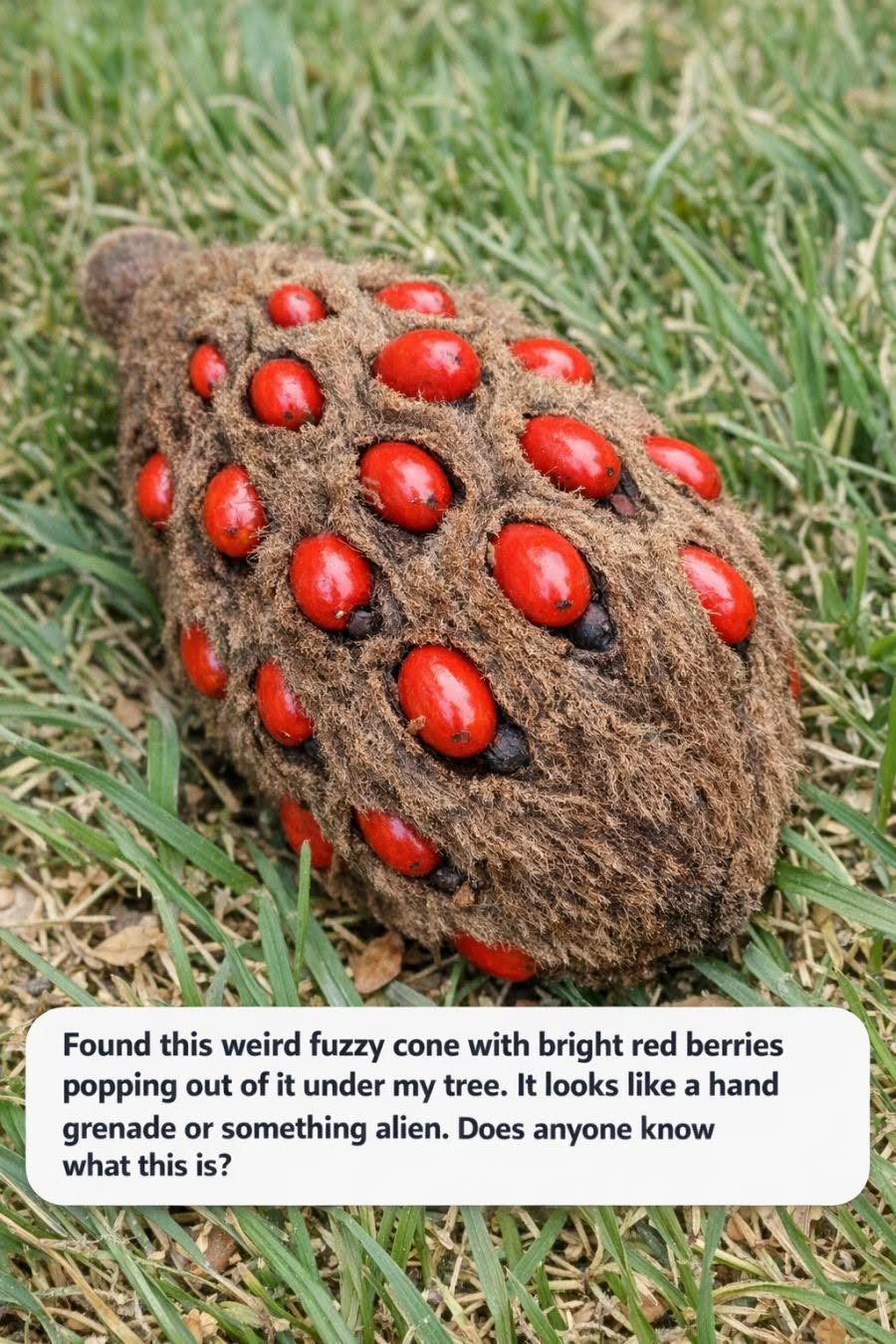
They develop after the tree flowers and gradually mature over the growing season.
As they mature, the pods become more fibrous and eventually split open, exposing the colorful seeds inside.
This transformation is why you may suddenly notice these unusual structures in your yard toward the end of the growing season.
Which Trees Produce Them?
Several magnolia species produce recognizable seed pods.
One of the best-known is the Southern magnolia (Magnolia grandiflora), famous for its large evergreen leaves and fragrant white flowers.
Other magnolias, including Sweetbay magnolia (Magnolia virginiana) and Cucumber tree (Magnolia acuminata), can also produce similar structures.
So if you find one beneath a tree, look around.
The tree above it may provide the biggest clue to the object’s identity.
Are Those Red Things Actually Berries?
Not exactly.
Although they may look like tiny red berries, they’re associated with magnolia seeds and their fleshy red coverings.
The bright color makes them highly visible to wildlife.
This is a good example of how nature can create something that looks almost artificial while serving a very practical biological purpose.
Is It Dangerous?
Magnolia seed pods aren’t generally considered highly poisonous, but that doesn’t mean they should be treated as food.