people.
Buttons, pleats, loops, and pockets often didn’t originate purely for decoration. Many of them solve a specific practical problem.
With the locker loop, this original problem is particularly easy to understand: How do you hang up a shirt when space is limited and no hanger is available?
The answer was a small, sturdy fabric loop.
Conclusion
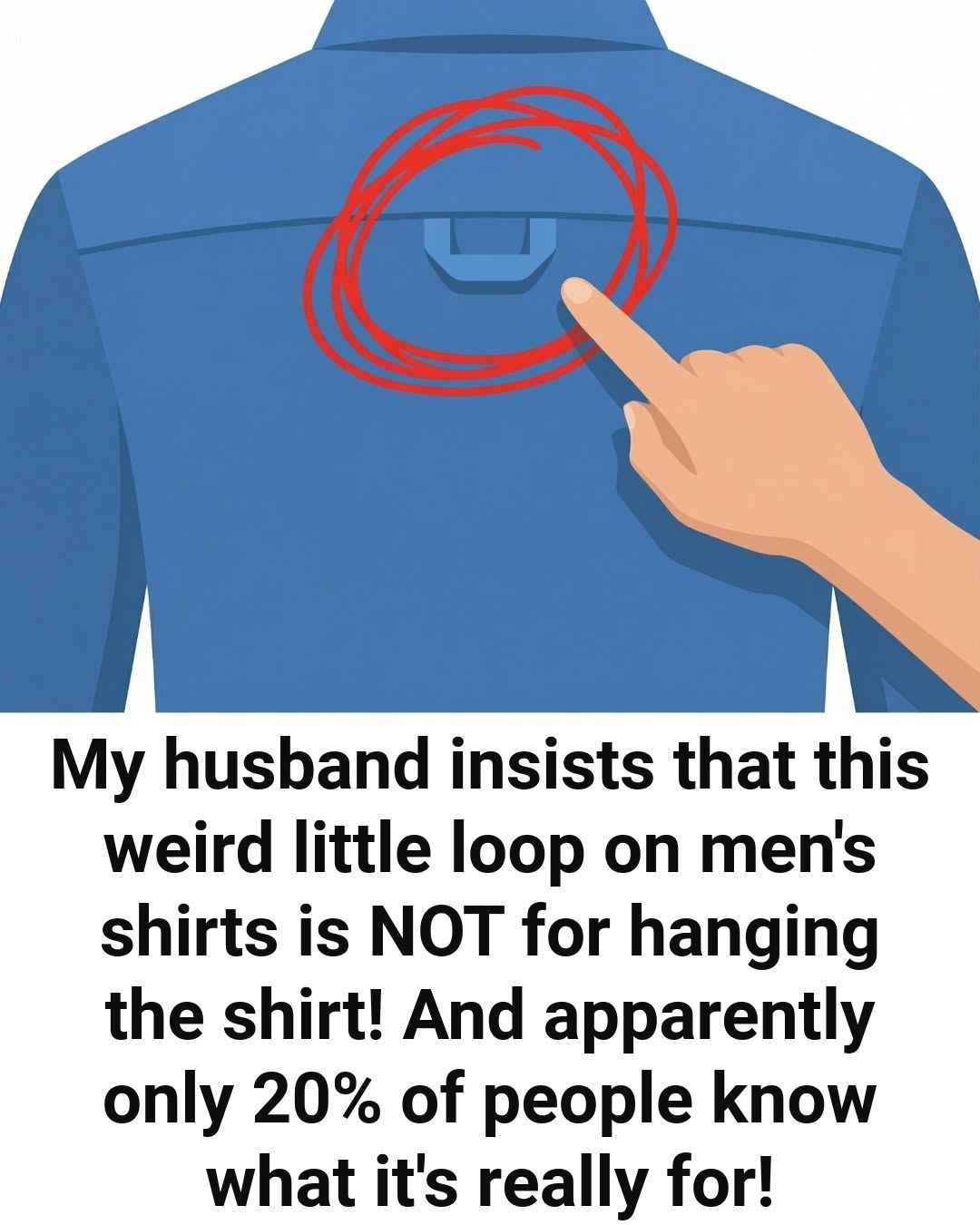
The small loop at the back of many shirts is by no means superfluous. It’s called a locker loop and was originally used to hang shirts on hooks in lockers or other confined storage areas.
Later, the detail became well-known, especially through American brands like Gant and the Ivy League style. At one time, the loop was even associated with a student relationship symbol.
Today, the locker loop on many shirts is primarily a sign of traditional design – but it can still do exactly what it was originally intended for: hang a shirt