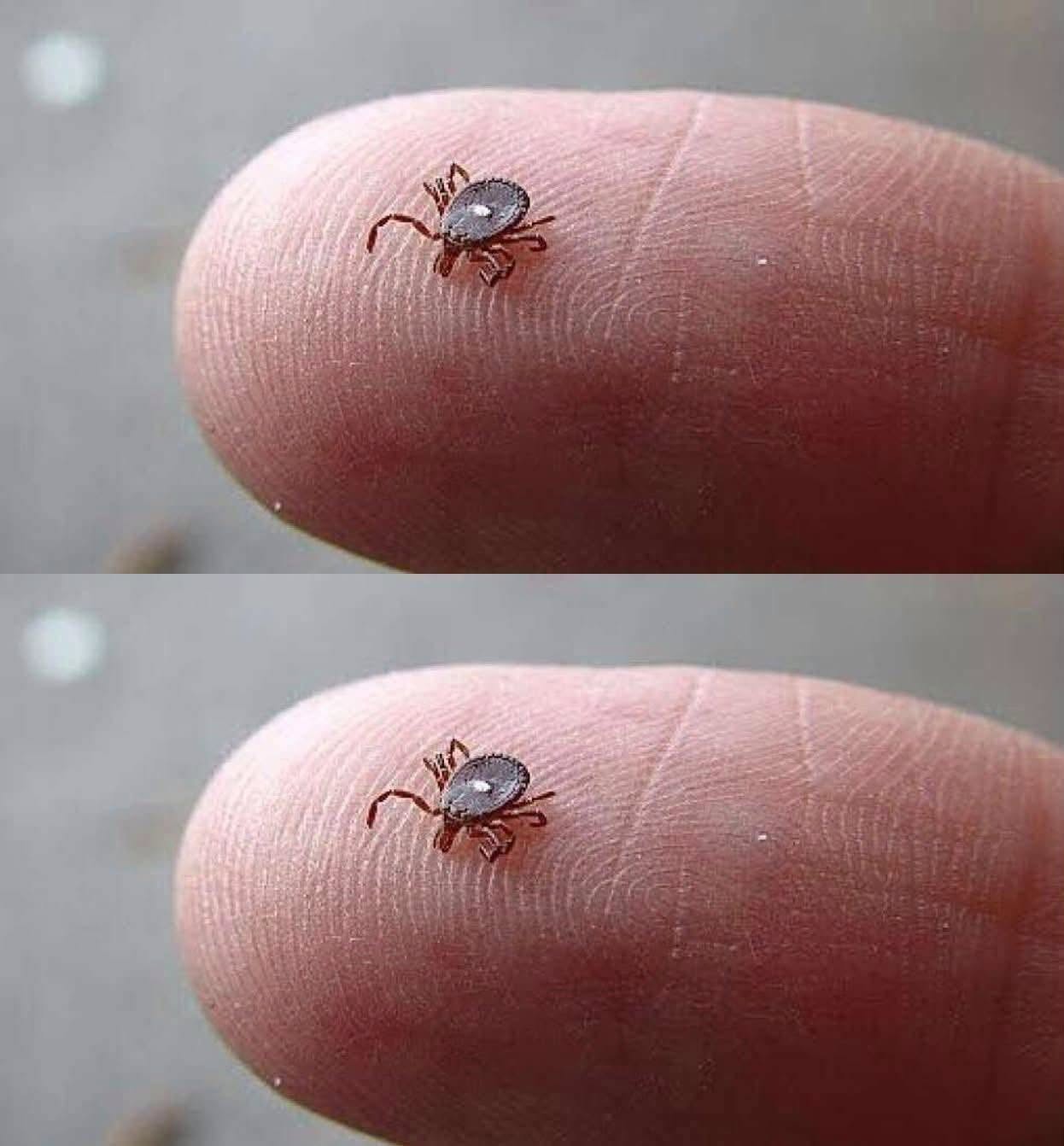
marking is a natural part of the tick’s body. It isn’t a parasite, egg, or unusual growth.
The adult female lone star tick is particularly recognizable because of this single pale spot on the shield-like area of its back.
This is where the name “lone star tick” comes from.
Should You Be Worried?
A tick found crawling on the skin is different from one that has already attached and fed. If the tick was simply crawling and was removed before attaching, the situation is generally less concerning.
Still, it’s important to check your child carefully after outdoor activities. Ticks can hide in areas such as the hairline, behind the ears, around the waist, and in skin folds.
Some ticks can transmit infections, so an attached tick should be removed promptly. The CDC recommends removing an attached tick as soon as possible.