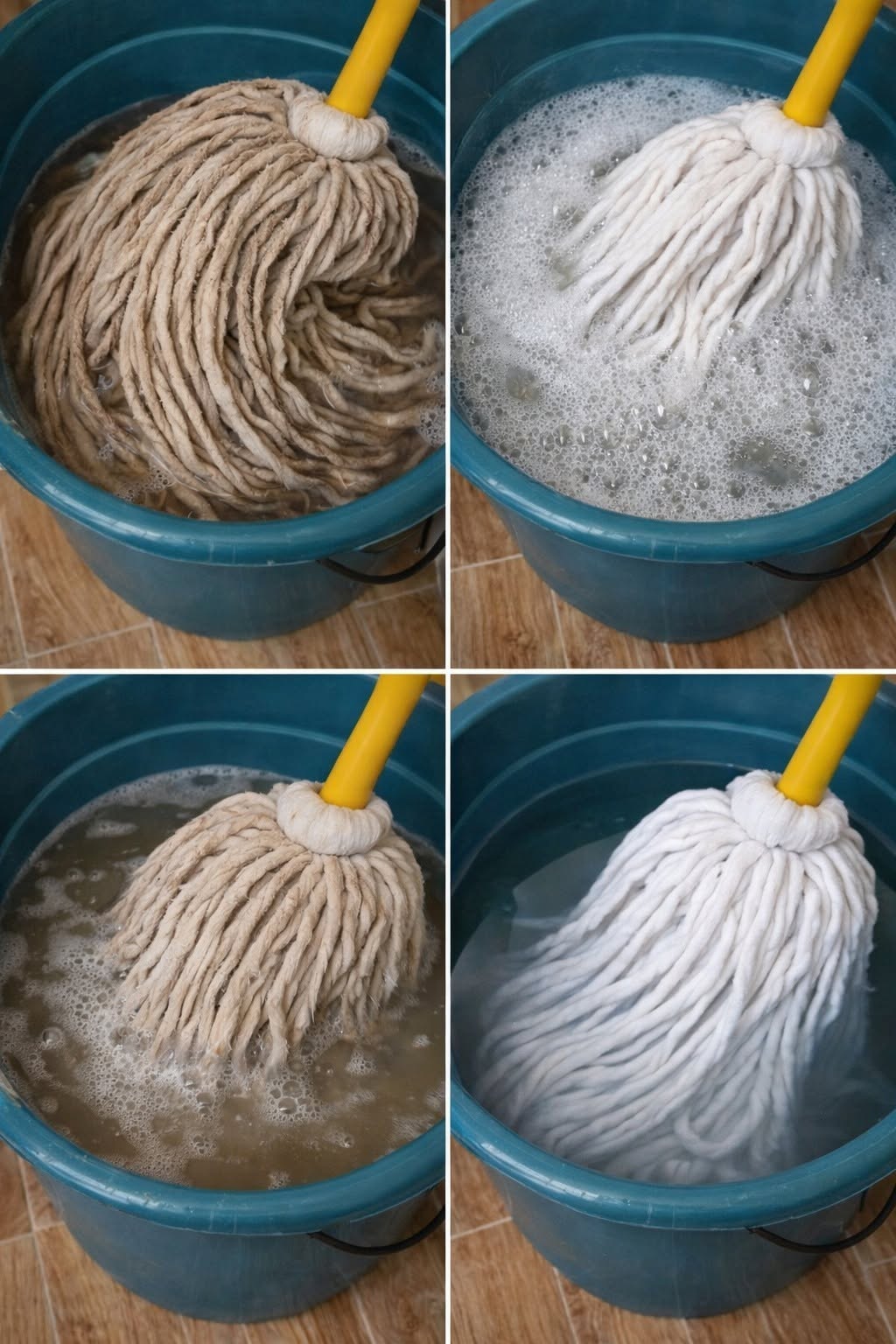
water and white vinegar.
Place the mop head in a bucket and allow it to soak for around 20–30 minutes. Then rinse it thoroughly with clean water and squeeze out the excess moisture.
Vinegar can help with unpleasant odors and mineral residue, making it a useful option for routine cleaning. However, always check the manufacturer’s care instructions first.
Important: Never mix vinegar with bleach or ammonia. Combining household chemicals can create dangerous fumes.
For Machine-Washable Mop Heads
If the mop head is labeled machine washable, washing it separately or with similar cleaning textiles can be an easy way to give it a deeper clean.
Use a suitable warm-water cycle and a small amount of mild detergent. For microfiber, avoid fabric softener because it can interfere with the fibers’ ability to absorb and collect dirt.
Some manufacturers recommend specific temperatures, so the care instructions for your particular mop should always come