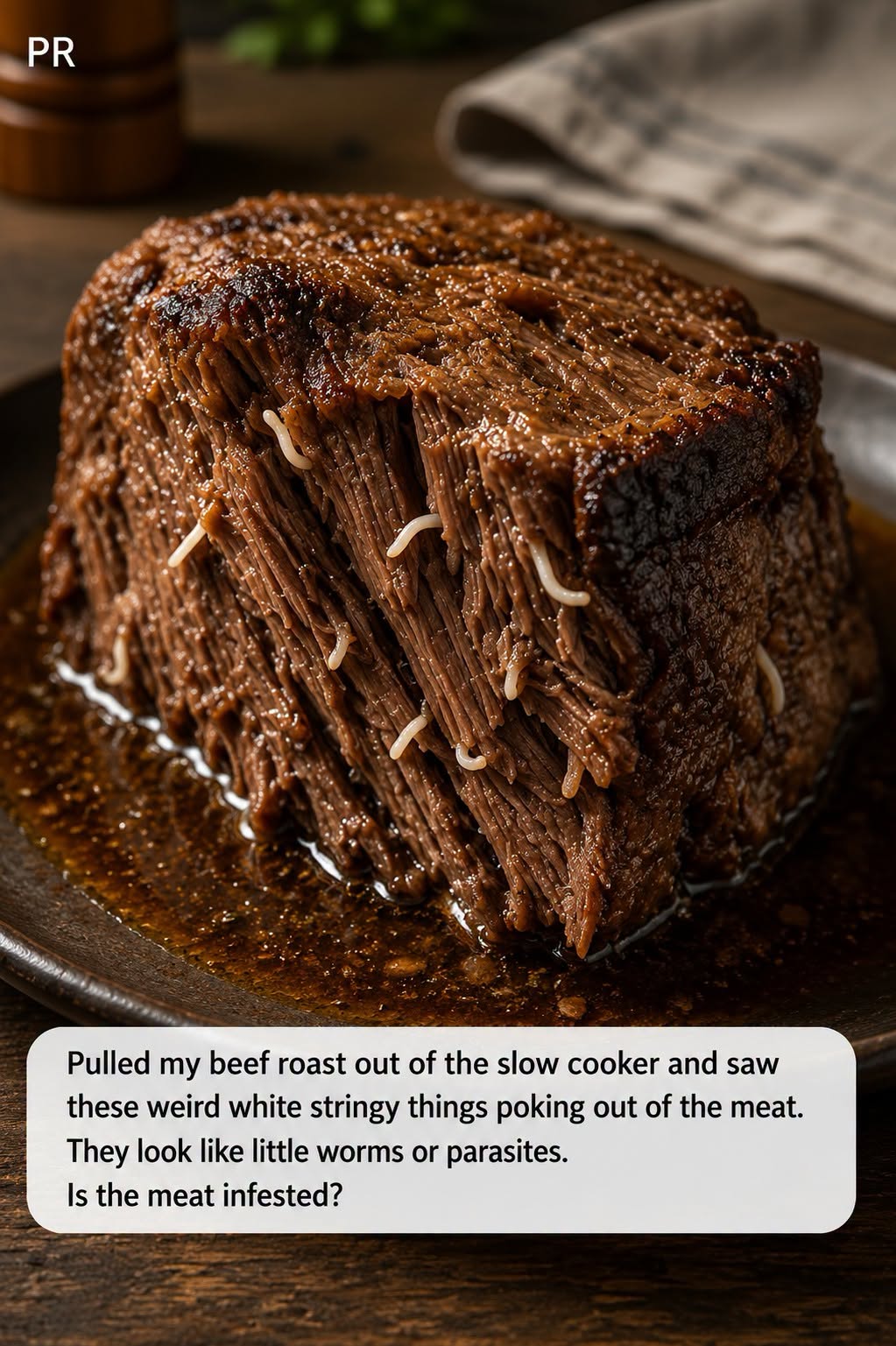
anything harmful. These collagen strands are soft, slippery, and blend into the meat. They don’t have structure, movement, or defined shape like parasites would. And importantly, the temperatures reached during slow cooking are more than enough to eliminate any real food safety risks.
If your roast smells normal, looks fully cooked, and was handled properly before cooking, it’s safe to eat. In fact, those strands contribute to the rich texture and flavor people love in slow-cooked meals.
If you prefer a smoother texture, you can trim visible connective tissue before cooking or shred the meat afterward so everything blends together naturally. But there’s no need to worry—they’re part of what makes slow cooking so effective.
In simple terms, those “strange” strings aren’t a problem—they’re proof your roast turned out exactly as it should.