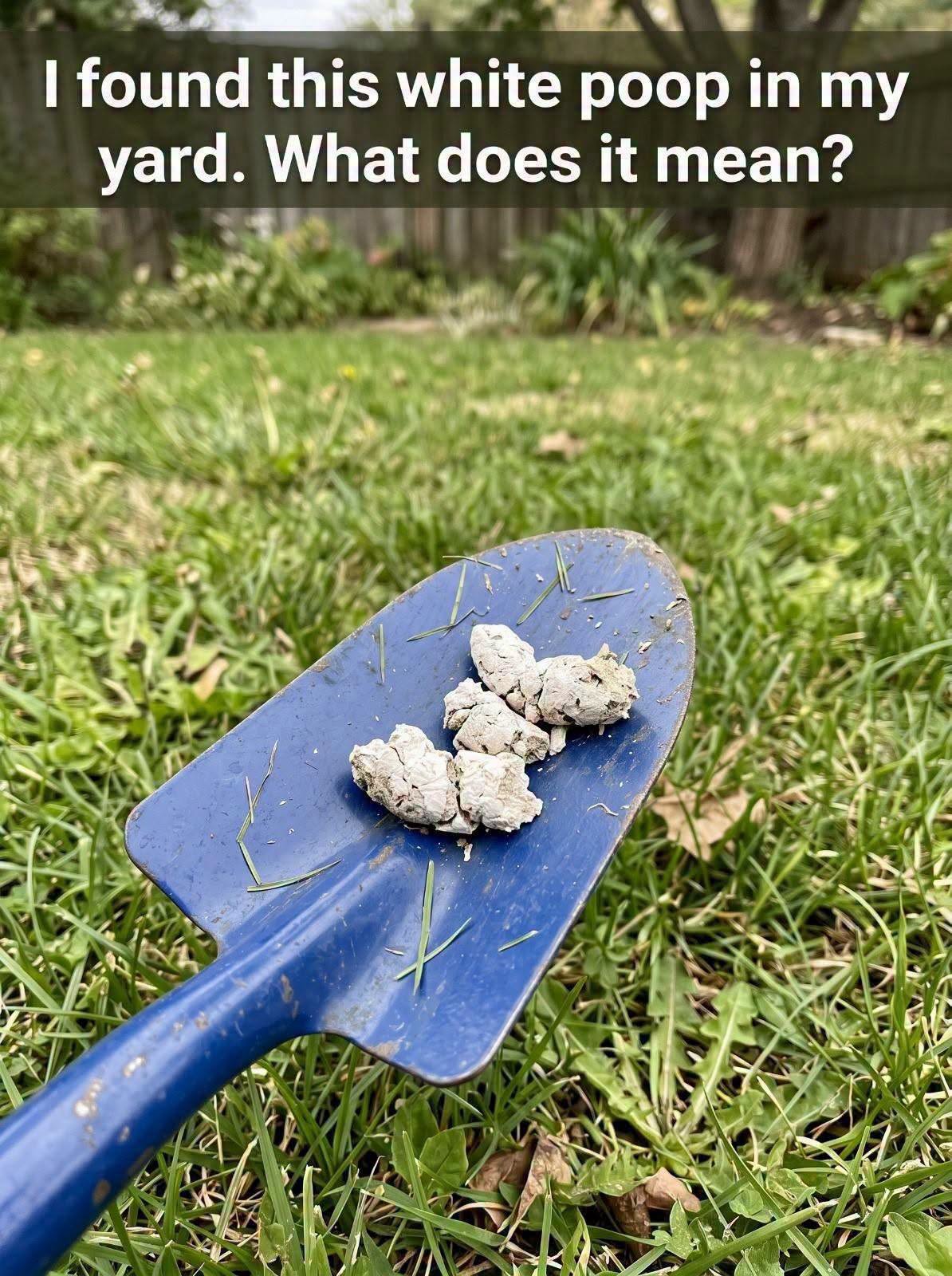
poop comes out looking relatively normal but becomes white or gray after sitting outside for a while, environmental changes and drying can play a role.
Older dog waste can become noticeably lighter as it dries and breaks down.
However, if your dog’s fresh stool is consistently pale, gray, or white, it deserves more attention.
Could It Be a Sign of a Health Problem?
Sometimes unusual stool color can be associated with digestive or other health problems.
Persistent pale or gray stool may occur when the normal digestion or movement of bile is disrupted. Bile contributes to the typical brown color of feces, so changes affecting bile flow can sometimes result in unusually light-colored stool.
Other symptoms matter too.
If your dog also has vomiting, diarrhea, poor appetite, unusual tiredness, abdominal discomfort, weight loss, or yellowing of the eyes or gums, it’s a good idea to contact a veterinarian.