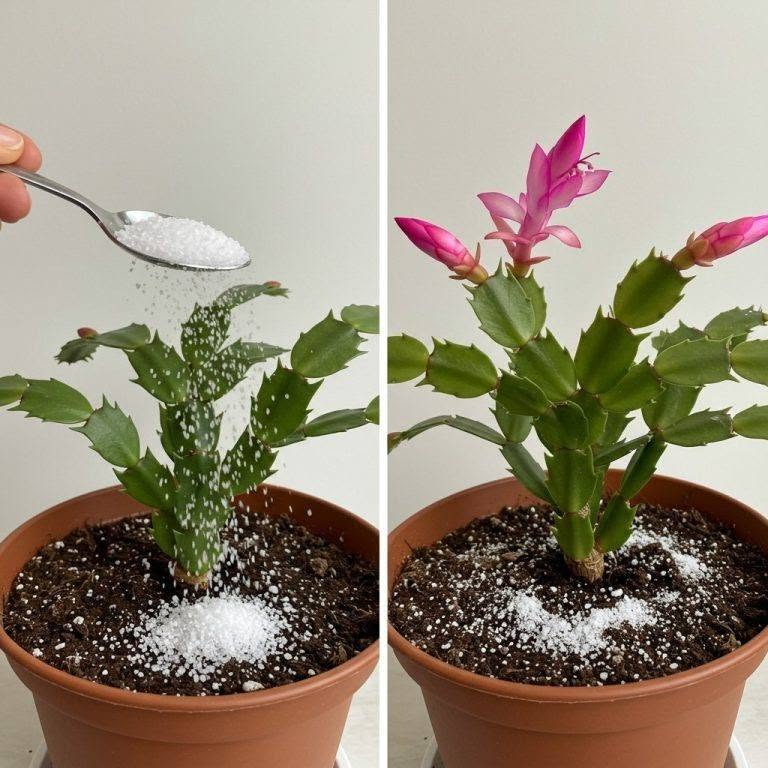
Have you ever looked at a houseplant and wondered why its leaves seem less vibrant or its flowers have stopped appearing?
A simple gardening tip involving Epsom salt has become popular among indoor-plant enthusiasts. The idea is to provide magnesium and sulfur, two nutrients that plants use for normal growth and photosynthesis.
What Is Epsom Salt?
Epsom salt is magnesium sulfate. Unlike regular table salt, it isn’t primarily used for cooking.
Magnesium is an important component of chlorophyll, while sulfur is involved in several processes that support plant growth. However, Epsom salt isn’t a complete fertilizer, and plants don’t automatically benefit from extra magnesium if their soil already contains enough.
How Gardeners Use It
If you want to try Epsom salt on a suitable houseplant, use plain, unscented Epsom salt.
A commonly suggested approach is to dissolve a small amount in water and apply it to the soil rather than