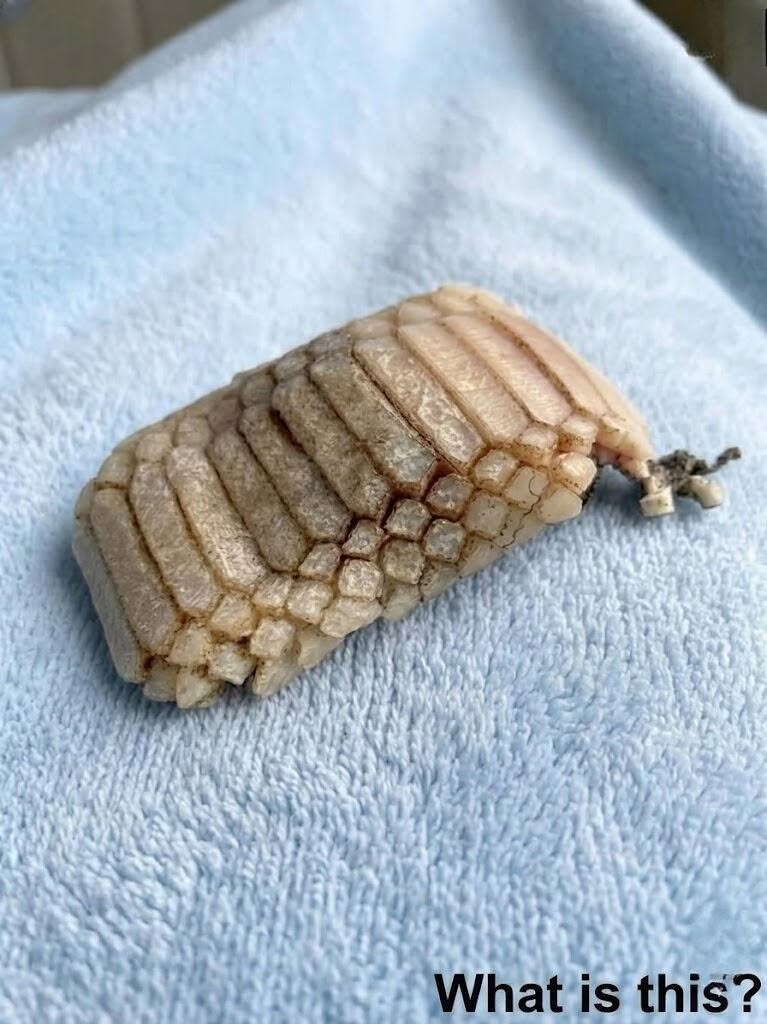
Why Does a Chiton Look So Strange?
The answer lies in its remarkable adaptation to life along the coast.
Chitons need to remain firmly attached to rocks despite waves, currents, and changing conditions. Their muscular foot helps them maintain that grip.
They also feed by scraping algae from rocky surfaces using rows of tiny teeth.
Seen from the right angle, those structures can look remarkably similar to a miniature set of mechanical teeth.
What appears frightening in a photograph is actually an example of a highly specialized survival system.
The Incredible Strength of Chiton Teeth
Perhaps the most surprising fact about chitons is the strength of their teeth.
Their teeth contain magnetite, an iron-rich mineral that contributes to their exceptional hardness.
These teeth allow chitons to scrape algae from hard rocks again and again without quickly wearing away.
Scientists have long been interested in chiton teeth because of their unusual combination of strength and biological construction.
So the creature that looked like something from a science-fiction movie is actually a fascinating example of natural engineering.
Why Our Eyes Can Fool Us
This story is a perfect reminder of how easily appearances can be misleading.
When we encounter something unfamiliar, our brains naturally try to compare it with things we already understand. An unusual shape can quickly become a monster, a mysterious object, or something dangerous in our imagination.