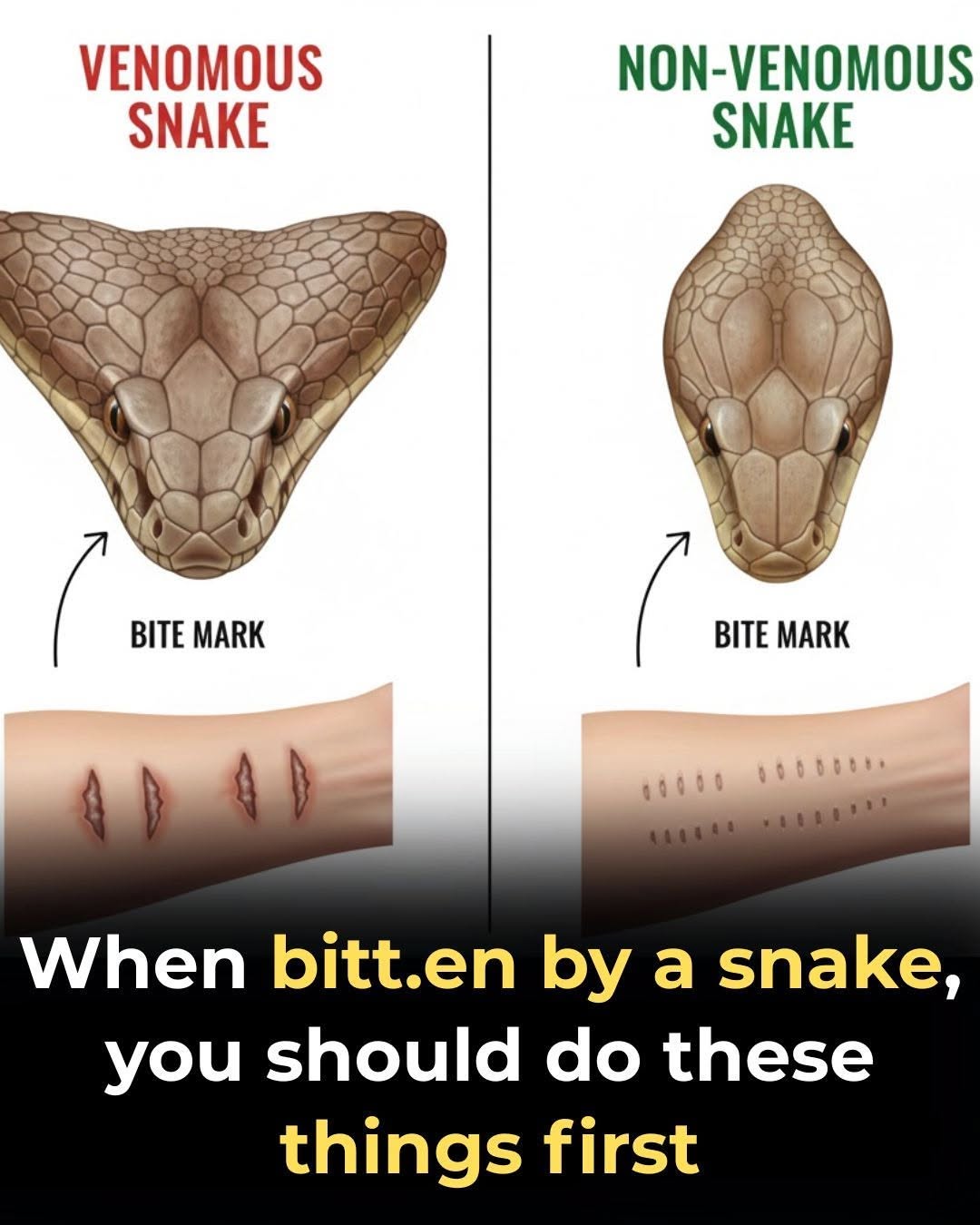
from a distance, a photograph may help medical professionals identify it. However, personal safety should always come first.
2. Get Medical Help Immediately
A person who has been bitten by a snake should be taken to an appropriate medical facility as soon as possible.
Venom can affect the nervous system, blood clotting, breathing, muscles, and other parts of the body.
Medical treatment may include monitoring, supportive care, and antivenom when appropriate.
Antivenom is the specific treatment used to neutralize the effects of venom from a venomous snake.
Do not wait for serious symptoms to appear before seeking medical attention.
3. Keep the Person Completely Still
Movement can increase circulation and potentially help venom spread through the body more quickly.
The person should remain as still and calm as possible.
If the bite is on an arm or leg, the affected limb should be immobilized with a splint or other suitable