If you don’t plan to use the beef within a day or two, consider freezing it to extend its freshness.
4. The Science of Oxygen, Myoglobin, and Color Changes in Meat
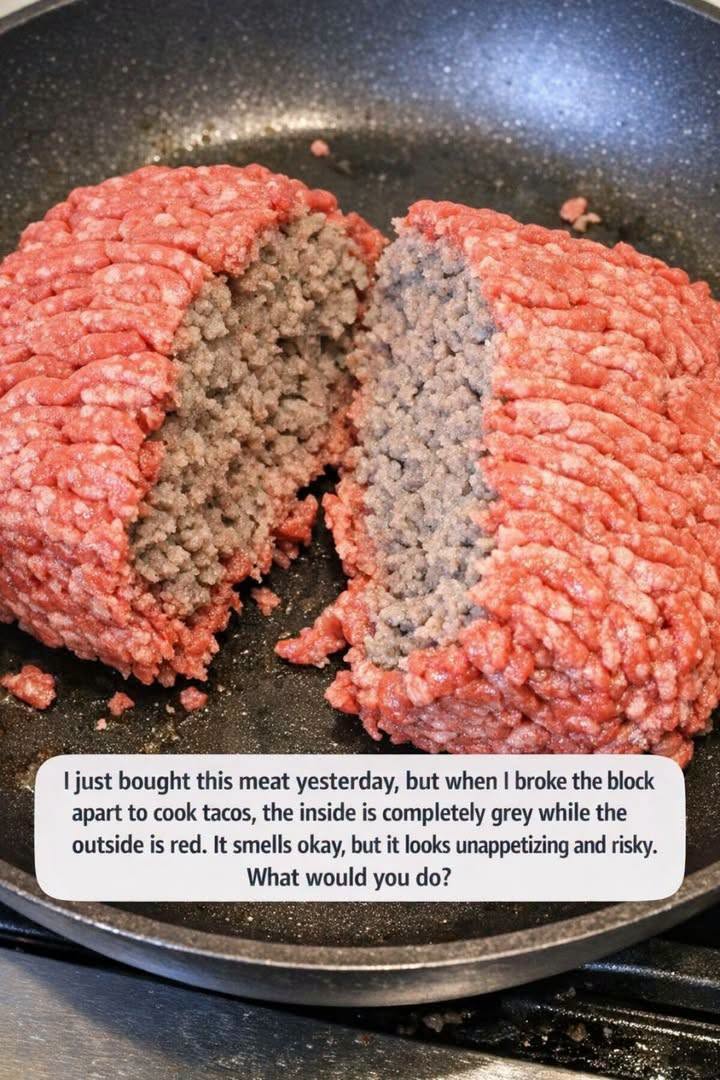
Myoglobin, a protein in muscle tissue, plays a key role in meat coloration. When exposed to air, myoglobin binds with oxygen, forming oxymyoglobin, which gives meat its appealing red hue. However, when oxygen is limited — as it is inside a tightly packed block of ground beef — myoglobin shifts to metmyoglobin, leading to a greyish coloration.
This change is purely cosmetic and doesn’t affect the safety of the meat. However, it’s important to remember that color alone isn’t a definitive indicator of freshness or safety.
5. When Grey Meat Is Probably Safe — and When It Definitely Isn’t
Grey meat can be safe to eat if it passes the other sensory checks: smell and texture. If the meat smells fresh